10 Small Dining Area Ideas for Apartments
A dining area in a small apartment is never just for dinner. It is the homework desk, the work-from-home office, the place where bags land when you walk in — and it usually sits between the kitchen and the door, in the path of everything. That is why the rule matters: the table serves the room, not the other way around.
A dining corner in a small apartment is usually one end of the living room or a strip of kitchen nobody measured. These 10 ideas are renter-friendly, made for that corner, and built around a starter budget of around $180. No renovation, no drilling, no landlord problems.
1. Measure the dining spot before you buy anything
Measure three things: the wall or window the table sits against, the walkway you need to keep clear — at least 30 inches — and the space behind each chair, about 36 inches so people can sit down and stand up without pushing the table. A round table 30–36 inches wide seats two to four and fits most apartment corners. Write the numbers on tape on the floor before you shop. If the table doesn’t fit the tape, it doesn’t fit the room.
2. A round table beats a rectangular one
A rectangular table has four corners that jab your hip every time you walk past. A round table has no corners, seats the same number of people in less space, and lets everyone see each other. A 36-inch round table seats four comfortably; a 30-inch one seats two with room for a laptop and a coffee. Around $60–$90 for a simple round table, less secondhand. If you already own a rectangular table, push its short end against the wall — it becomes a side table with two seats, and the room gets its walkway back.

3. Use a drop-leaf or extendable table
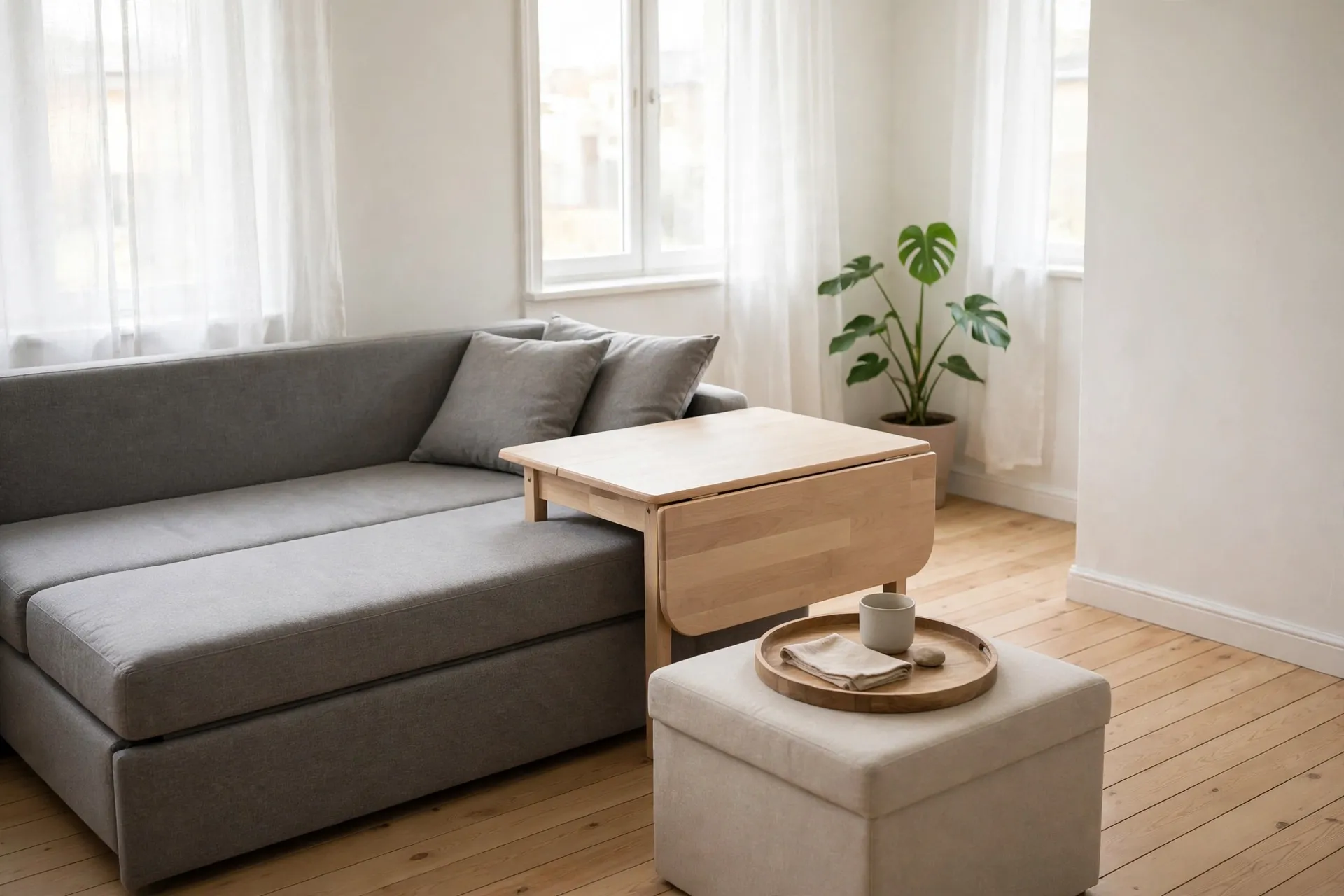
A drop-leaf table is 24 inches wide when the leaves are down and 48 inches when they’re up. On a normal Tuesday it’s a console table against the wall; on Saturday, with two friends over, it’s a real dining table. Around $70–$120. Keep the leaves up only when you need them, and the dining area disappears into the wall the rest of the week. The same trick works for a wall-mounted extendable table — folded flat, it’s a shelf.
4. Put a bench on one side instead of chairs
A bench pushed against the wall seats two people in the space of one chair, and slides fully under the table when dinner is over. Around $25–$40 for a simple wooden bench, or a storage bench with a lift-up seat that holds placemats and tablecloths. A bench saves about 12 inches of floor space compared to two chairs with clearance. Kids sit on it, guests squeeze onto it, and it doubles as a hallway seat when the table is folded away.

5. Try a wall-mounted fold-down table
If your dining area is a strip of wall between the kitchen and the door, a fold-down table is the answer. Mounted with two brackets — or a freestanding version that leans against the wall, no drilling — it folds down to a 24-inch-deep table for two and folds flat when you’re done. Around $40–$70. Two stools tuck underneath it and hang on wall hooks when the table is up. It’s a dining table on demand, and a blank wall the rest of the day.
6. Let the windowsill be the table for two
Two people, one window, no table at all. A wide windowsill, a narrow counter ledge, or a bar cart pulled up to the window seats two with a view, for about $0 if the sill is already there, or $30–$50 for a small bar cart. Two stools slide under the sill when you’re done. It’s not a dinner party setup — it’s breakfast and coffee for two, in the brightest corner of the apartment, and it costs nothing to try.
7. Buy chairs that tuck fully under the table
A chair that sticks out 6 inches past the table edge is a chair you’ll trip over every night. Measure the space under the table — the apron, the legs, the height — and buy chairs whose seats slide completely underneath. Armless chairs tuck best; a chair with arms needs 4 more inches of clearance. Around $20–$30 each for simple armless chairs. When every chair disappears under the table, the dining area is a clear floor again.
8. Hang one pendant light low over the table
One light changes a dining corner more than any furniture. A plug-in pendant or a battery pendant, hung 24–30 inches above the table, makes the table the center of the room and everything else fade into the background. Around $15–$25. Warm light, 2700K, around 800 lumens. If you can’t hang anything, a tall candle in a jar on the table does the same job for dinner — just keep it away from curtains and papers.

9. Open the corner with a mirror and a pale color
A dining corner in a small apartment feels tight because two walls close in on it. Hang a mirror on one wall — a 20-inch round one, on one adhesive hook — and paint the wall behind the table the palest color you can live with, or stick one strip of pale peel-and-stick wallpaper there. Around $20–$35 total. The mirror doubles the light, the pale wall pushes the corner back, and the table reads as a dining area instead of a dead end.
10. Clear the table after every meal
The cheapest idea is a habit. After every meal, clear the table completely: plates to the sink, one centerpiece back in the middle — a plant, a candle, a small bowl — and nothing else. Five minutes. A dining table that stays clear gets used for dinner; a dining table covered in mail, keys and chargers becomes a storage shelf, and then you eat on the sofa. That was my first apartment. The table is a table only if it stays empty between meals.
The $180 Small Dining Area Starter Kit
One realistic way to spend it:
- Round table, 36 inches: ~$70
- Two armless chairs: ~$50
- Wooden bench: ~$30
- Plug-in pendant light: ~$20
- Placemats + a small centerpiece: ~$10
- Total: ~$180 — and all of it moves with you to the next rental.
Start with the tape measure and the round table. Those two cost about $70 and decide whether the corner works at all.
Small Dining Area FAQ
What size table fits a small apartment dining area?
A round table 30–36 inches wide seats two to four and fits most corners. Leave 36 inches behind each chair so people can sit and stand, and 30 inches of clear walkway past the table. Measure the floor with tape before you buy.
How do I fit a dining table in a studio apartment?
Use a drop-leaf or fold-down table against one wall, a bench on the wall side, and chairs that tuck fully under. If your dining corner is in the living room, my Small Living Room Layout Ideas That Actually Work shows how to place it without blocking the walkway.
What’s the cheapest dining setup for a small space?
A secondhand round table, two armless chairs and a bench — around $100–$140 total. Add a plug-in pendant for $15–$25 and the corner looks finished. For storage nearby, my Small Kitchen Organization: 12 Ideas That Save Space keeps the plates and glasses within reach of the table.
Small dining area numbers that matter
- 30–36 inches: a round table that seats two to four. A 30-inch table seats two with room for a laptop; 36 inches seats four comfortably.
- 24 inches: the space each person needs at the table. Four people need about 96 inches around the edge — a 36-inch round table gives you about 113.
- 36 inches: the clearance behind each chair. Less than that, and people push the table every time they sit down or stand up.
- 30 inches: the walkway you must keep clear past the table. If the walkway is gone, the dining area owns the apartment.
- 12 inches: what a bench saves compared to two chairs with clearance. A bench slides fully under the table; chairs never quite do.
- 24 inches: a drop-leaf table folded down. Up, it’s 48 inches — a real table for four, from a console table against the wall.
- 24–30 inches: pendant height above the table. Lower and it blocks faces; higher and the light stops feeling like a dining room.
- 5 minutes: the table reset after every meal. Plates away, one centerpiece back. A table that stays clear gets used for dinner; a covered one becomes a shelf.
What to Skip
Skip the six-chair dining set — it was built for a dining room you don’t have, and it turns your living room into a furniture showroom. Skip a glass-top table if you have kids or pets: it shows every fingerprint, every crumb, and it chips at the corners. Skip buying chairs before measuring whether they tuck fully under the table — a chair that sticks out 6 inches is a chair you’ll trip over nightly. Skip the matching set too: a table, four chairs and a bench bought as a set costs more than the same pieces bought separately, and the set never fits your corner. And skip using the dining table as storage. The table is a table only if it stays empty between meals.
A small dining area doesn’t need a dining room. It needs a round table that fits, chairs that disappear under it, one low light, and five minutes after every meal.
Start tonight, with the tape on the floor. Tomorrow, the table.
About the author: Woodjinald Emmanuel runs Lite Habitats, a blog about decorating small spaces on a budget. He started it to show that a small home can feel beautiful without spending a fortune.