10 Hidden Storage Ideas for Small Homes
Count the storage your home already has, and then count what you actually use. Most small homes fail the second count: the space under the bed holds nothing but dust, the 6 inches behind the door hold nothing at all, the inside of the sofa is hollow and empty, and the top of the closet is a graveyard for things nobody can reach. The storage is there. It is just hiding in the places nobody thought to open.
A small home is usually under 800 square feet, and every square foot of floor is already spoken for — which is why hidden storage wins. It does not add furniture. It uses the dead space inside the furniture and the rooms you already own. These 10 ideas are renter-friendly, made for that size, and built around a starter budget of around $100. No drilling into the structure, no renovation, no landlord problems. The bedroom version of the same logic lives in my 15 Small Bedroom Ideas Under $300 — start there if the bedroom is the worst room.
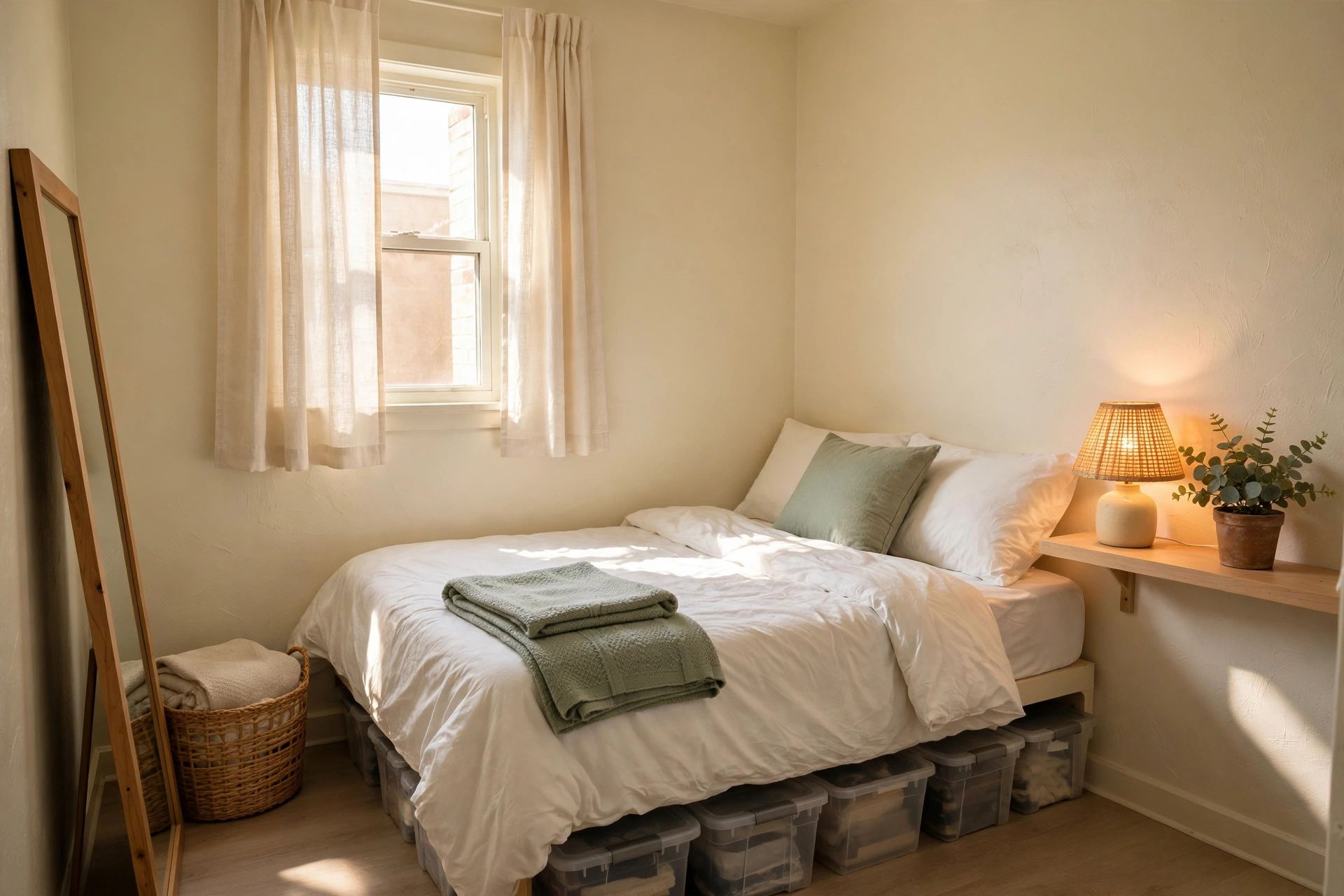
1. Start under the bed, where the biggest space hides
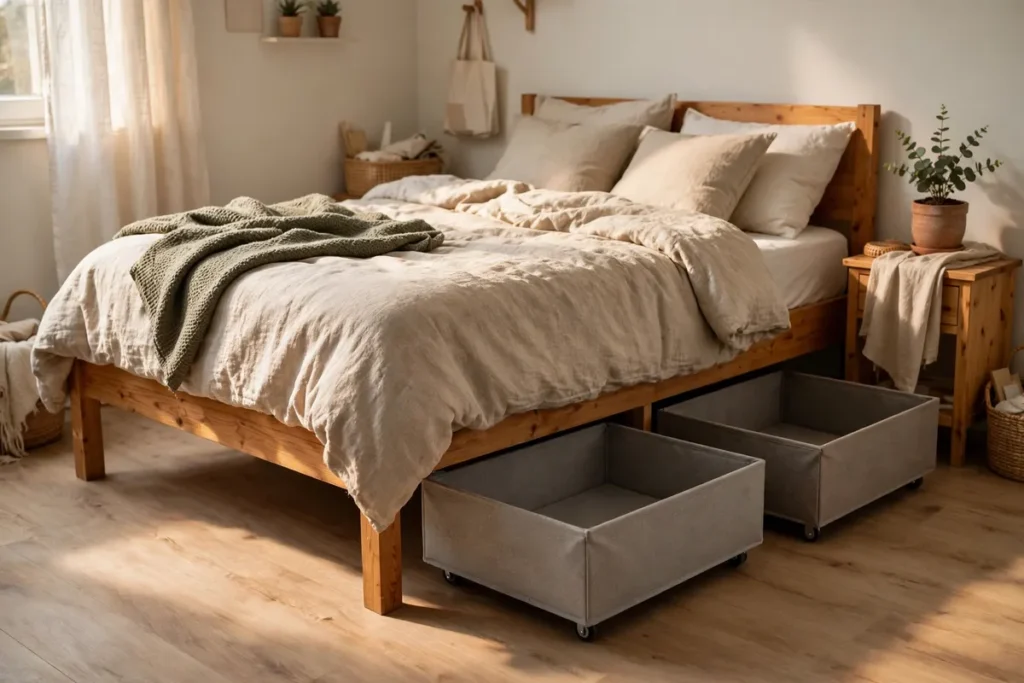
The space under a standard bed is about 7 inches tall, 75 inches long, and 60 inches wide — roughly 18 cubic feet of storage, bigger than most closets, and most people use exactly none of it. Low, flat boxes on wheels, about $12–$15 each, slide in and out without lifting the mattress: off-season clothes in one, spare bedding in another, shoes in a third. Measure the clearance first — a bed frame that sits 5 inches off the floor needs slim boxes, not standard ones, and a $10 set of bed risers adds 3 inches of height if you need it.
2. Use the 6 inches behind every door
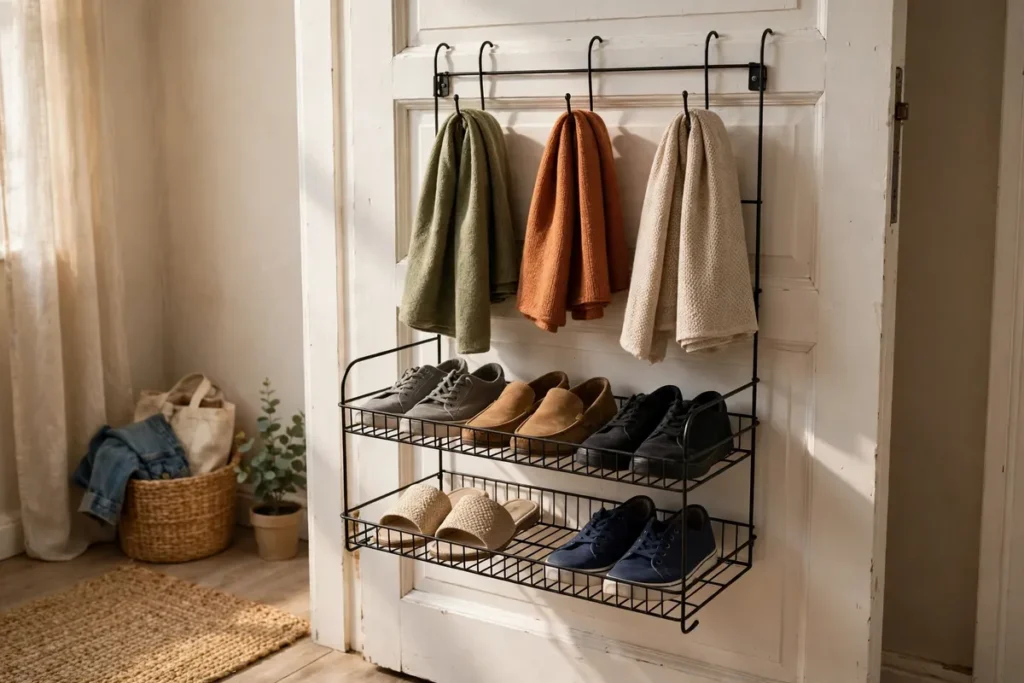
The back of a door is a wall nobody counts. An over-the-door rack — hooks on top, no screws, no holes — holds shoes, cleaning supplies, scarves, or pantry jars in the 6 inches of air between the door and the wall. Around $10–$20, and it moves with you when you move. The bathroom door holds towels and the hair dryer; the pantry door holds spices in small racks; the bedroom door holds tomorrow’s clothes, already picked out.
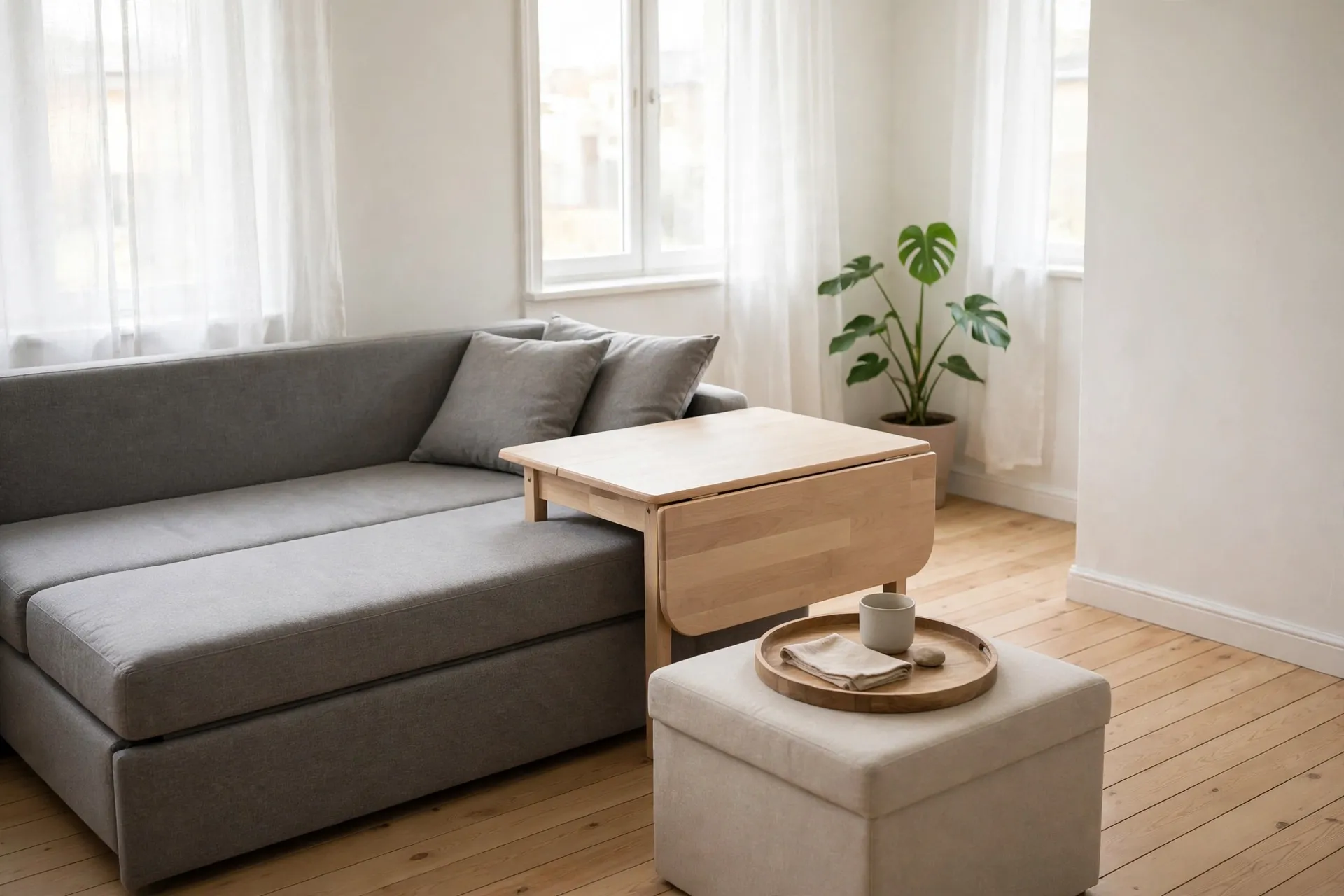
3. Buy furniture that hides things on purpose
A storage ottoman looks like a footrest and holds two blankets, a board game, and the remote controls nobody can find. A lift-top coffee table looks like a table and holds the laptop, the chargers, and the magazines. A storage bench by the door looks like a seat and holds the shoes. Each one costs about $30–$60 secondhand or on sale, and each one replaces a piece of furniture you already own — so it costs no floor space at all.
4. Hide the clutter in the sofa itself
The space behind the sofa cushions and under the sofa seat is the junk drawer of the living room — remote controls, chargers, the book you are halfway through, all of it sliding into the gap and vanishing. A slim caddy that slides between the armrest and the cushion, about $12–$18, holds the remote, the phone, and a drink without a side table. Under the sofa, a flat tray on wheels — about $15 — holds the board games and the spare throw, and slides out like a drawer.
5. Turn the closet top into a real shelf
The top shelf of a closet is usually a dead zone: too high to reach, too deep to see into, and full of one bag nobody remembers. A second, lower shelf — a simple wire shelf on brackets, about $15–$25 — splits that dead zone in two and doubles what the closet holds. Put the things you use every week on the lower shelf and the things you use twice a year on the top one, in labeled boxes you can see from the floor. If the closet needs the full treatment, my Small Closet Organization Ideas for Apartments walks through it shelf by shelf.
6. Store things inside the stairs and the hallway
A hallway is not a room, but it is full of dead space: the wall above the door frame, the 12 inches beside the radiator, the inside of a narrow console table. A shelf above a door frame — one board, two brackets, about $10–$15 — holds the books and the board games nobody uses weekly. A narrow console, no deeper than 10 inches, holds the keys, the mail, and the dog leash without blocking the walkway.
7. Hide the kitchen overflow in plain sight
A small kitchen runs out of cabinet space first, and the overflow ends up on the counter — which is exactly where you need to cook. The inside of a cabinet door holds a spice rack, a measuring-cup rail, or a cutting-board slot, about $8–$12 per rack, with adhesive strips instead of screws. The gap between the fridge and the wall — usually about 6 inches — fits a slim rolling cart, around $20–$25, for oils, cans, and the things you grab every day. The pantry version of this logic follows the same rules, with smaller jars.
8. Use the space under the sink properly
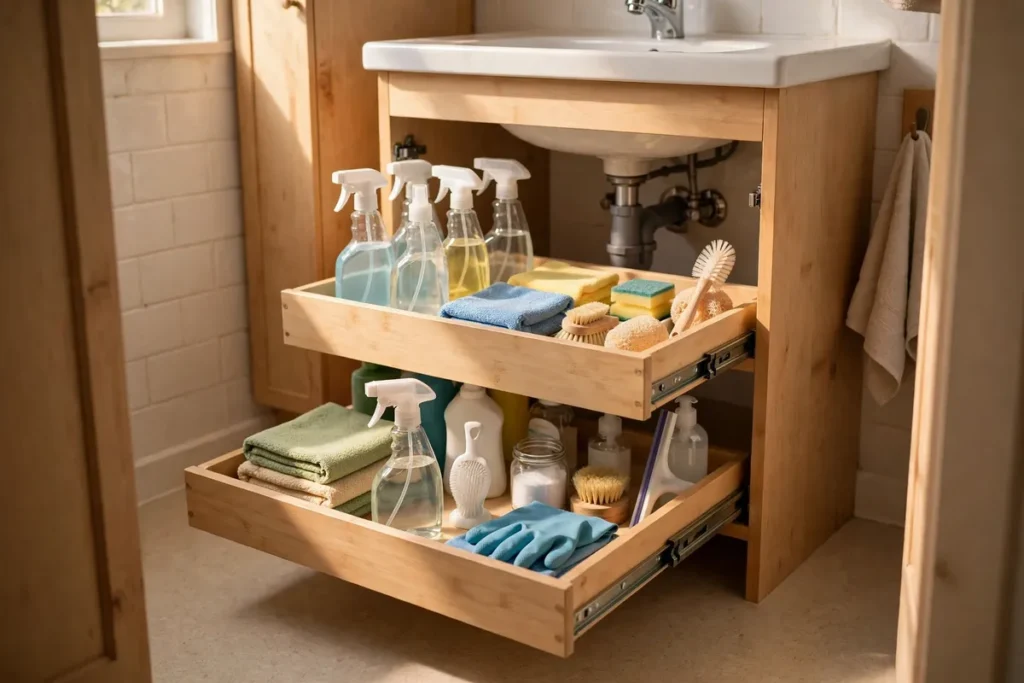
Under the sink is the most wasted cabinet in a small home: pipes in the middle, cleaning bottles falling over, and a dark hole where things go to be forgotten. A two-tier sliding drawer that fits around the pipes, about $20–$30, turns that hole into two usable shelves that pull out toward you. A tension rod across the cabinet, about $5, holds spray bottles by their triggers and frees the floor of the cabinet for the rest.
9. Make the bathroom hide its own clutter
A small bathroom has no counter space and no closet, so everything lives on the sink — which is why it always looks messy. A mirror cabinet instead of a flat mirror, about $30–$50, holds the toothbrushes, the medicine, and the creams behind a door you open every morning anyway. A narrow rolling cart, about 10 inches wide and $20–$25, slides into the gap between the toilet and the wall and holds towels and toilet paper. Over-the-toilet shelving, about $25–$35, uses the 2 square feet of wall nobody else wants.
10. Do the 20-minute hidden-storage reset
Hidden storage fails the same way every time: the hidden places fill up, and nobody looks inside them for six months. Once a month, spend 20 minutes opening every hidden spot — under the bed, behind the doors, inside the ottoman, on top of the closet — and pull out one thing from each that you have not used in three months.
The $100 Hidden Storage Starter Kit
One realistic way to spend it:
- Two under-bed boxes on wheels: ~$25
- One over-the-door rack: ~$15
- One storage ottoman, secondhand: ~$35
- One under-sink sliding drawer: ~$25
- Total: ~$100 — and every piece moves with you to the next home.
Start under the bed and behind one door. Those two spots alone hold more than a whole extra closet.
Hidden Storage FAQ
Where is the best hidden storage in a small home?
Under the bed — about 18 cubic feet in a standard bed, bigger than most closets, and almost always empty. Behind doors is second: 6 inches of unused air on every door in the home, held by a $10–$20 rack with no screws.
What furniture hides the most storage?
A storage ottoman or a lift-top coffee table: each one replaces a piece you already own, costs $30–$60 secondhand, and hides blankets, games, chargers, and remotes without taking a single extra square foot of floor.
How do I keep hidden storage from becoming a junk pile?
One rule and one habit: only store things you use at least once every three months, and spend 20 minutes once a month opening every hidden spot and pulling out one unused thing from each. Hidden storage is for things you use, not things you forgot.
Hidden storage numbers that matter
- 18 cubic feet: the space under a standard bed — bigger than most closets, usually empty.
- 6 inches: the dead air behind every door, enough for a $10–$20 over-the-door rack.
- 10 pounds: the weight limit for an over-the-door rack, or the hinges will sag.
- 10 inches: the maximum depth for hallway furniture — deeper than that blocks the 30-inch walkway.
- $100: the starter kit — under-bed boxes, a door rack, a storage ottoman, and an under-sink drawer.
- 20 minutes: one monthly reset — open every hidden spot, pull out one unused thing from each.
- 3 months: the test — if you have not used it in three months, it does not belong in hidden storage.
What to Skip
Skip the storage you cannot reach — a box on top of a closet with no step stool is not storage, it is a attic you pay rent on. Skip the over-the-door rack loaded past 10 pounds; sagging hinges cost more to fix than the rack saved. Skip the pretty baskets with no labels: a basket you cannot identify from the outside is a box you will never open. Skip storing things you have not used in a year “just in case” — hidden storage is for the things you use, and the just-in-case box belongs in the donate pile. And skip the rolling cart wider than the gap it is meant for: measure the space between the fridge and the wall, or the toilet and the wall, before you order anything.
Your home already has the storage. It is under the bed, behind the doors, and inside the furniture you already own.
Start under the bed tonight. One box, labeled, facing out — and the room already feels bigger.